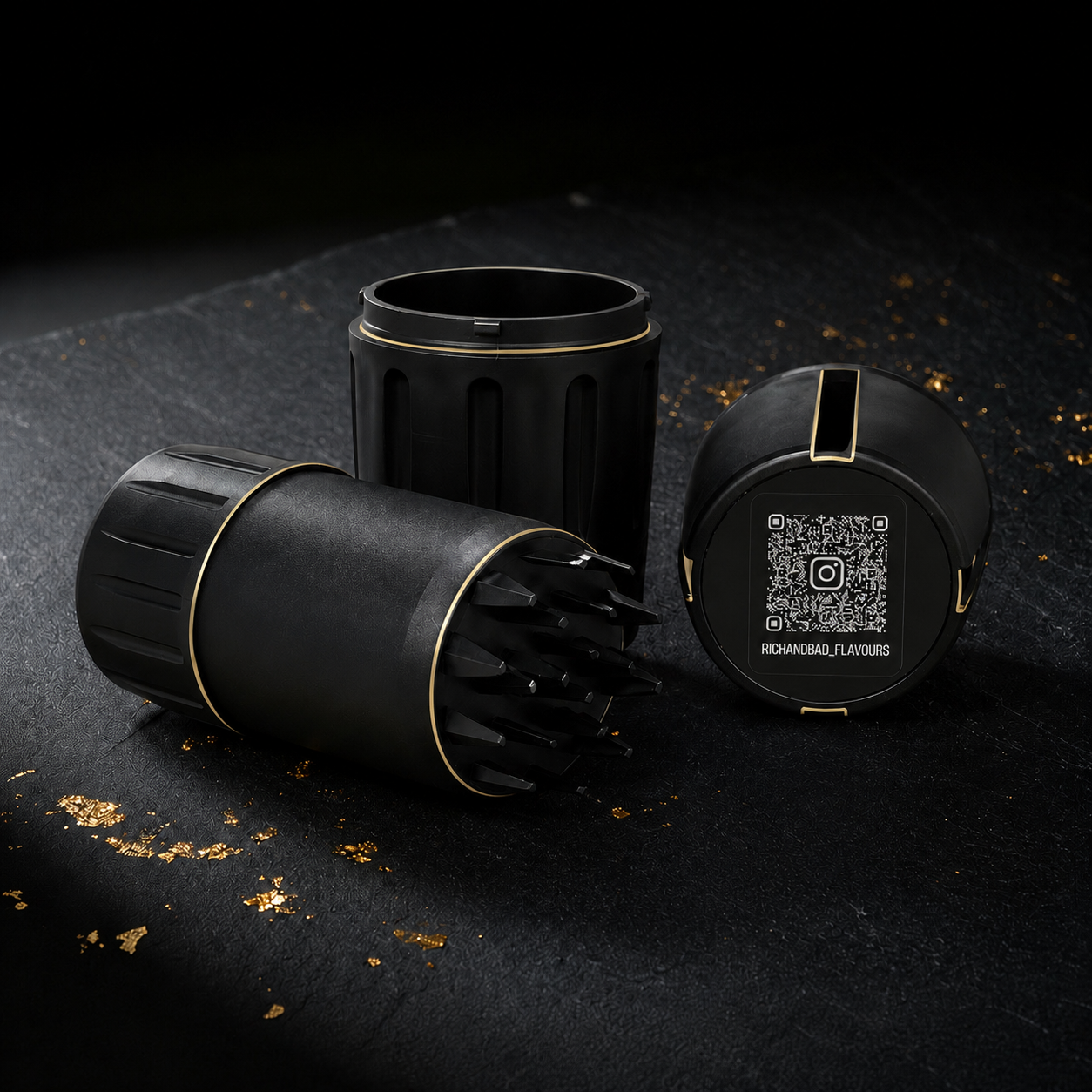
Best Smell-Proof Storage: What Actually Contains the Smell
Most "smell-proof" containers are just containers. Here is the difference between a seal that works and marketing on a label.
The three things that actually contain smell
A continuous gasket. A silicone O-ring compressed by a screw or latch closure. If a lid just presses on, air moves and so does the smell.
Activated carbon. Carbon does not block odour, it adsorbs the molecules. This is what separates a genuine smell-proof bag from a zip pouch. Carbon saturates over roughly 6 to 12 months of daily use and cannot be recharged at home despite what you will read.
Rigid walls. A soft pouch flexes every time you pick it up and pumps air — and smell — out through the seams. Rigid or semi-rigid construction is a real advantage.
Match the container to the job
Pocket and travel. A crusher with a screw-down lid and integrated storage. Small, rigid, and it does two jobs so you carry one thing instead of three. Look for a child-resistant push-and-turn closure if there are kids in the house.
Bag and rucksack. A carbon-lined bag with a roll-top or lockable zip. This is the only format that handles bulk plus accessories.
Home storage. UV-tinted glass with a gasket lid. UV glass matters more than people think — light degrades cannabinoids and terpenes faster than air does. Keep it in a cupboard anyway.
What does not work
- Kitchen zip bags, at any thickness
- Clear glass on a windowsill
- Any container advertised as smell-proof with a friction-fit lid and no gasket
- Vacuum sealing for anything you intend to keep in good condition — it crushes trichomes
Humidity
The target is 58 to 62% relative humidity. Below 55% material turns to dust; above 65% you are growing mould. A two-way humidity pack in the jar holds the range for about two months.
Our picks
The Luxury Smell-Proof Travel Storage Crusher for pocket carry, the Carbon-Lined Smell-Proof Bag for transport, and the UV-Tinted Storage Jar for keeping things right at home.